A temple stay on Mt. Koya: how to spend a night in a Japanese monastery
How to book a shukubo on Koyasan, what a night in a Buddhist temple is like, getting there from Osaka, food notes for Muslim travellers, and Japan visa steps for Pakistanis.
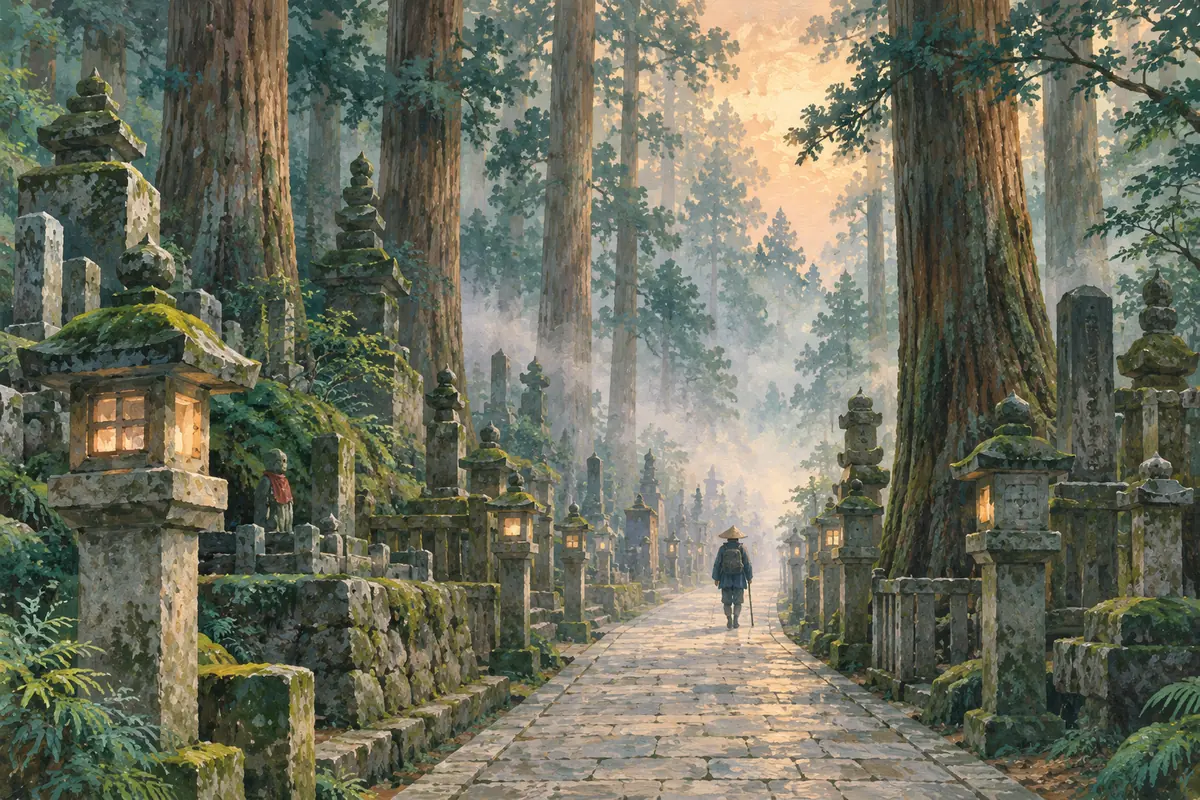
Most people see Japan through hotel windows. On Mt. Koya you sleep inside a working Buddhist monastery, eat what the monks eat, and wake up to chanting before sunrise.
The Broke Backpacker once sent its readers here with a simple line: you can spend the night in a temple. It’s still true, and it’s still one of the most memorable nights you can have in Japan.
What Koyasan is
Koyasan is a mountain-top temple town in Wakayama Prefecture, a couple of hours south of Osaka.
It was founded in 816, when the monk Kukai, known after his death as Kobo Daishi, was given permission to build a monastery here. It became the centre of Shingon Buddhism. Today around 117 temples stand on the mountain.
Since 2004 Koyasan has been part of a UNESCO World Heritage site, the Sacred Sites and Pilgrimage Routes in the Kii Mountain Range.
What a shukubo is
A shukubo is temple lodging. More than 50 of Koyasan’s temples take overnight guests.
You get a traditional Japanese room with tatami mats and a futon, usually with sliding paper doors. Baths are shared and separated by gender.
It’s not a hotel. The monks keep their own routine, and they look after guests at set times.
What happens during your stay
The rhythm is the whole point, so it helps to know it before you arrive.
- Arrival: most temples want you in by late afternoon, around 17:00.
- Dinner: shojin ryori, the vegetarian cooking of Buddhist monks, served around 17:30 to 18:00, often in your room.
- Evening: some temples offer meditation or sutra copying. Ekoin, one of the best known, also runs a nightly goma fire ritual.
- Morning service: around 06:00, lasting 30 to 45 minutes. Guests are welcome to sit in.
- Breakfast: around 07:00, then check-out mid-morning.
Check-in times and any curfew differ from temple to temple. Read your confirmation carefully.
How much it costs, and how to book
Expect roughly ¥15,000 to ¥40,000 per person per night for a standard room with dinner and breakfast. Premium rooms with private gardens or baths can cost far more.
Book on the Koyasan Shukubo Association’s official site. A handful of temples can be booked instantly. For the rest you send a request and the association confirms it.
Two practical points:
- Bring cash. Many temples don’t take cards.
- Book early for autumn. The maple season in November fills up fast.
Food: a note for Muslim travellers
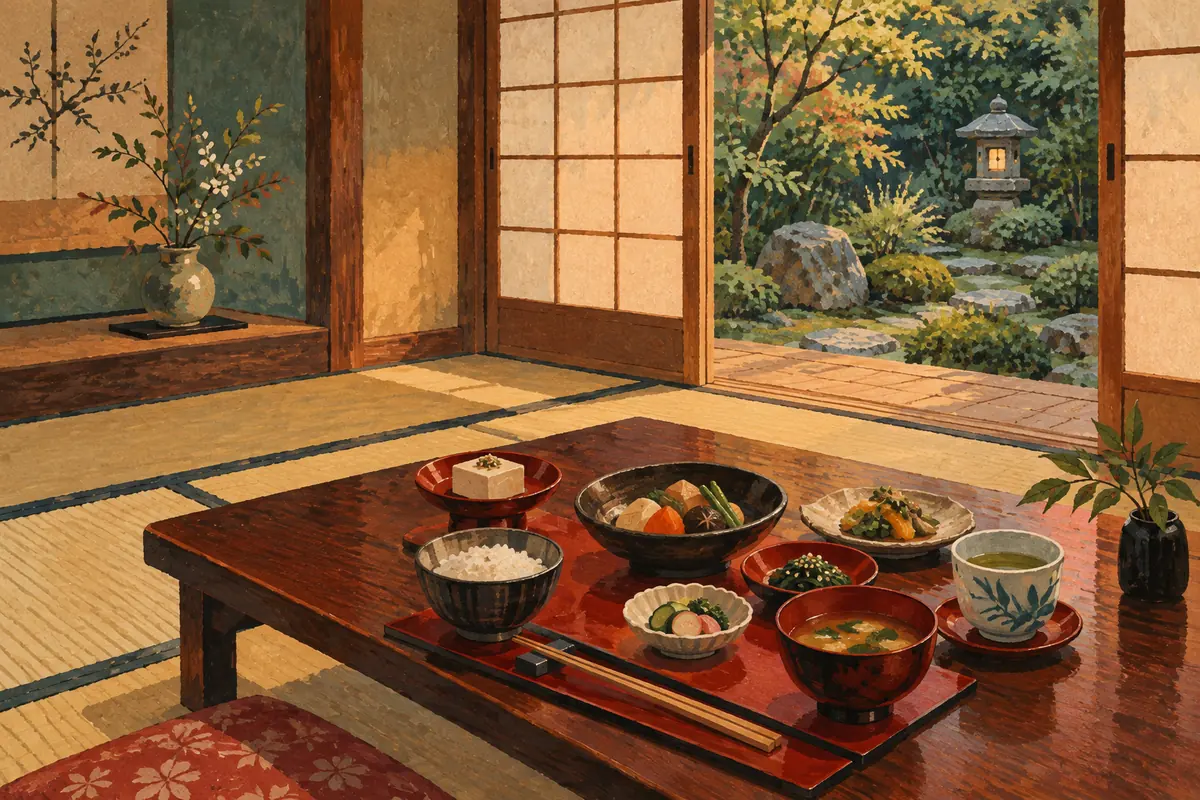
Shojin ryori contains no meat and no fish. For many Muslim travellers that sounds ideal, and it’s close.
But it isn’t automatically halal. Mirin and sake are common seasonings in Japanese cooking, and temples often sell beer and sake with dinner.
If this matters to you, email the temple when you book. Ask plainly: can my meals be cooked without mirin, sake or any alcohol? Some temples, including Ekoin, say they welcome guests of all faiths and ask you to share dietary needs in advance.
Getting there from Osaka
The trip takes about two hours from Namba station and uses three kinds of transport.
- Train: Nankai Koya Line from Namba to Gokurakubashi. The limited express takes about 80 minutes. The regular express is cheaper and slower, with a change at Hashimoto.
- Cable car: about five minutes up the mountain to Koyasan station.
- Bus: about ten minutes into the town. You can’t walk this road, so the bus is the only way.
The Koyasan World Heritage Ticket bundles the round trip from Osaka with unlimited local buses for two days. It usually works out cheaper than paying separately. Check Nankai’s website for current prices before you go.
What to see
Give yourself at least one full day, ideally two nights.
- Okunoin: Japan’s largest cemetery, with more than 200,000 tombstones under giant cedars. A path of about 2 km leads to Kobo Daishi’s mausoleum, where he is believed to rest in eternal meditation. Walk it at dusk, when the lanterns come on.
- Danjo Garan: the monastery’s original core, with halls and a bright red pagoda.
- Kongobu-ji: the head temple of Shingon Buddhism, with painted sliding doors and a large rock garden.
Temple etiquette
A few simple habits make the stay easier for everyone.
- Shoes off wherever there’s a raised floor or tatami.
- Keep your voice down, especially at night and before the morning service.
- No photos, food or drink past the Gobyobashi Bridge in Okunoin, near the mausoleum. Bow when you cross.
- Dress properly for the morning service. The yukata robe in your room is for sleeping and the bath, not for prayers.
Japan visa for Pakistani passport holders
Pakistani passport holders need a visa to visit Japan, and can’t use Japan’s eVISA system.
- Apply through VFS Global, which handles Japan visa applications in Pakistan for the Embassy of Japan.
- If you live in Sindh or Balochistan, your application goes to the Consulate-General of Japan in Karachi.
- Standard processing is about six working days after VFS receives your file, but some cases take much longer.
Check the embassy’s document list before you apply. Hotel bookings help your file, so book your shukubo early and keep the confirmation.
Thinking about living in Japan rather than visiting? Japan is one of the countries where Pakistani graduates can work as English teachers on an Instructor visa.
Is it worth it?
If you want comfort, stay in a hotel in Osaka and visit Koyasan as a day trip.
If you want to feel how a place lives, stay the night. Dinner on the floor, a futon in a paper-walled room, and a 6 a.m. prayer hall full of incense are hard to forget. Plan your paperwork first, then let the mountain slow you down.
For other countries’ rules, see our visa guides for Pakistani passport holders.
Quick answers
How much does a temple stay on Koyasan cost?
Roughly ¥15,000 to ¥40,000 per person per night for a standard room with dinner and breakfast. Premium rooms at some temples cost much more. Many temples take cash only.
How do I book a shukubo on Mt. Koya?
Through the Koyasan Shukubo Association's official website. A few temples can be booked instantly; the rest work as a request that the association confirms.
Is the food at Koyasan temples halal?
Shojin ryori has no meat or fish, but it isn't automatically halal. Mirin or sake is often used in cooking. Ask your temple in advance whether they can prepare your meals without alcohol.
Do Pakistanis need a visa for Japan?
Yes. Pakistani passport holders can't use Japan's eVISA and apply through VFS Global. Residents of Sindh and Balochistan apply through the Consulate-General in Karachi.
General travel information, not legal advice. Found something out of date? Tell us what changed.